


Lamination processing methods for printed materials


I. What is printing lamination
Printing lamination, also known as film lamination or coating, refers to the post-processing technique of laminating a layer of transparent plastic film (commonly BOPP, PET, etc.) onto the surface of printed materials using adhesives or hot pressing. The laminated printed material has a protective film on its surface, which can prevent the graphics from being scratched, worn, or contaminated. It also serves to provide waterproofing, moisture protection, gloss enhancement, or matte finish, and can improve the paper's stiffness and overall texture. Lamination is widely used for products such as book and periodical covers, hardcover art albums, packaging boxes, business cards, shopping bags, and hang tags.
II. Classification of Coating Processes
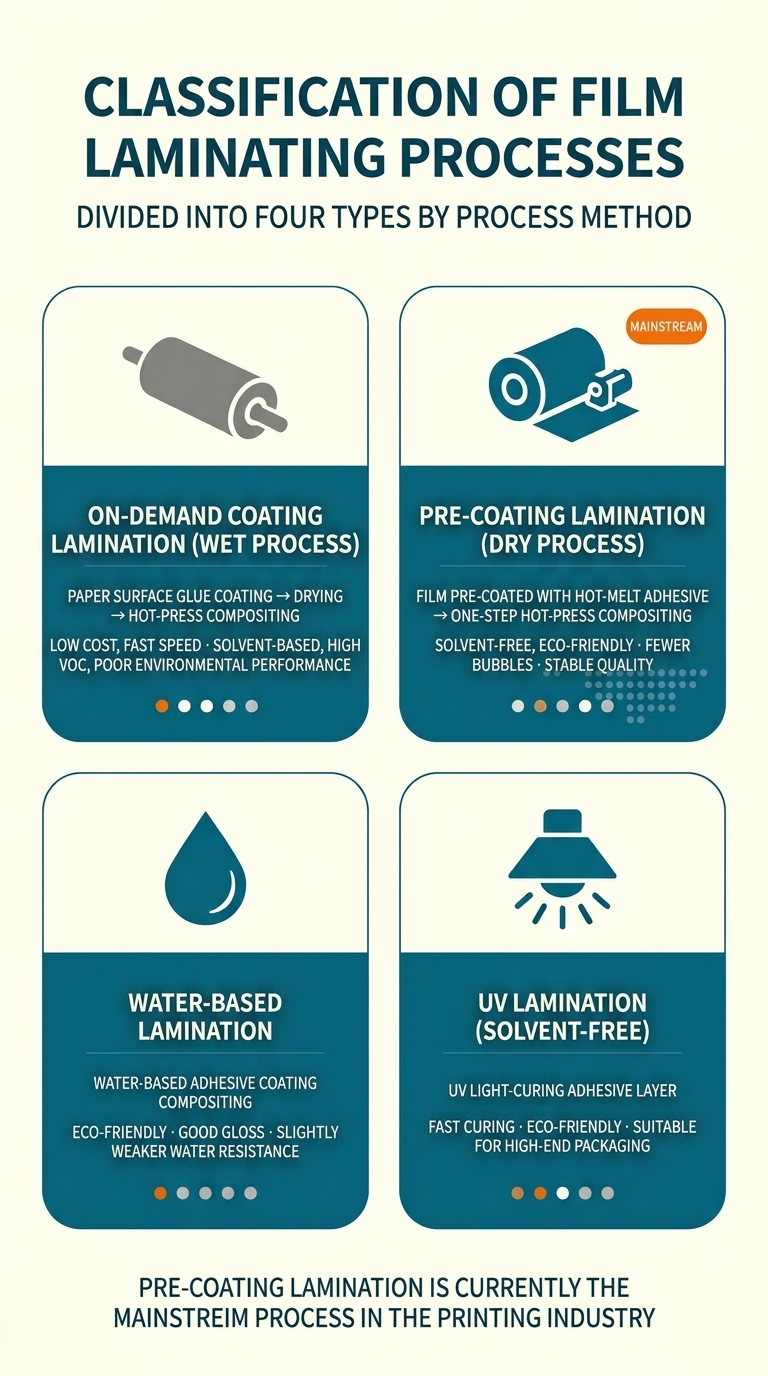
1. Classification by Process Method
Wet Lamination (Adhesive-coated lamination): The printed material first passes through a coating unit to apply a layer of adhesive; after drying to remove the solvent, it is bonded to the film under heat and pressure. This process requires low equipment investment, offers high speed, and entails lower costs; however, solvent-based adhesives raise issues regarding Volatile Organic Compound (VOC) emissions and poor environmental performance, leading to the process gradually being phased out.
Pre-coated Lamination (Dry lamination): The film comes pre-coated with a layer of hot-melt adhesive from the manufacturer; during use, the printed material and the pre-coated film are simply bonded together in a single step under heat and pressure. As no solvents are used during production, it is environmentally friendly, offers stable bonding quality with minimal bubbling, and is easy to operate, making it the mainstream process in the printing industry.
Water-based Lamination: This process uses water-based adhesives (with water as the solvent) for coating and bonding. It is environmentally friendly and offers excellent gloss, though the adhesive layer has relatively weak water resistance; it is suitable for general products with strict environmental requirements.
UV Lamination (Solvent-free lamination): This method employs a UV-curable adhesive layer that cures rapidly under ultraviolet light after bonding. It eliminates the need for a drying stage, offers fast curing speeds and superior environmental performance, and is widely used for high-end packaging and premium printed materials.
2. Classification by film material
BOPP film (Biaxially Oriented Polypropylene): Offers high transparency, good stiffness, and excellent cost-effectiveness; it is the most commonly used lamination material.
PET film (polyester): High hardness, heat and wear resistance, good dimensional stability, used for high-end packaging and products requiring strong protection.
PVC film: Has a softer texture but poor environmental performance; it is now rarely used.
Specialty films: Include soft-touch films (velvet-like feel), laser/holographic films, pearlescent films, anti-counterfeiting films, etc., used for special decorative effects and security purposes.
3. Classification by surface finish
Gloss film: Features a high-gloss surface with vibrant, bright colors; suitable for products requiring strong visual impact.
Matte film: Features a matte surface that is understated and elegant; non-reflective and dirt-resistant, it conveys a premium feel and is commonly used for book covers and high-end art albums.
Partial lamination: Lamination is applied only to a specific area of the printed material (such as the logo or main pattern). The contrast between glossy and matte finishes, as well as between the laminated and unlaminated areas, creates a sense of depth and tactile difference. This technique is widely used in premium packaging design.
III. Lamination Process Flow
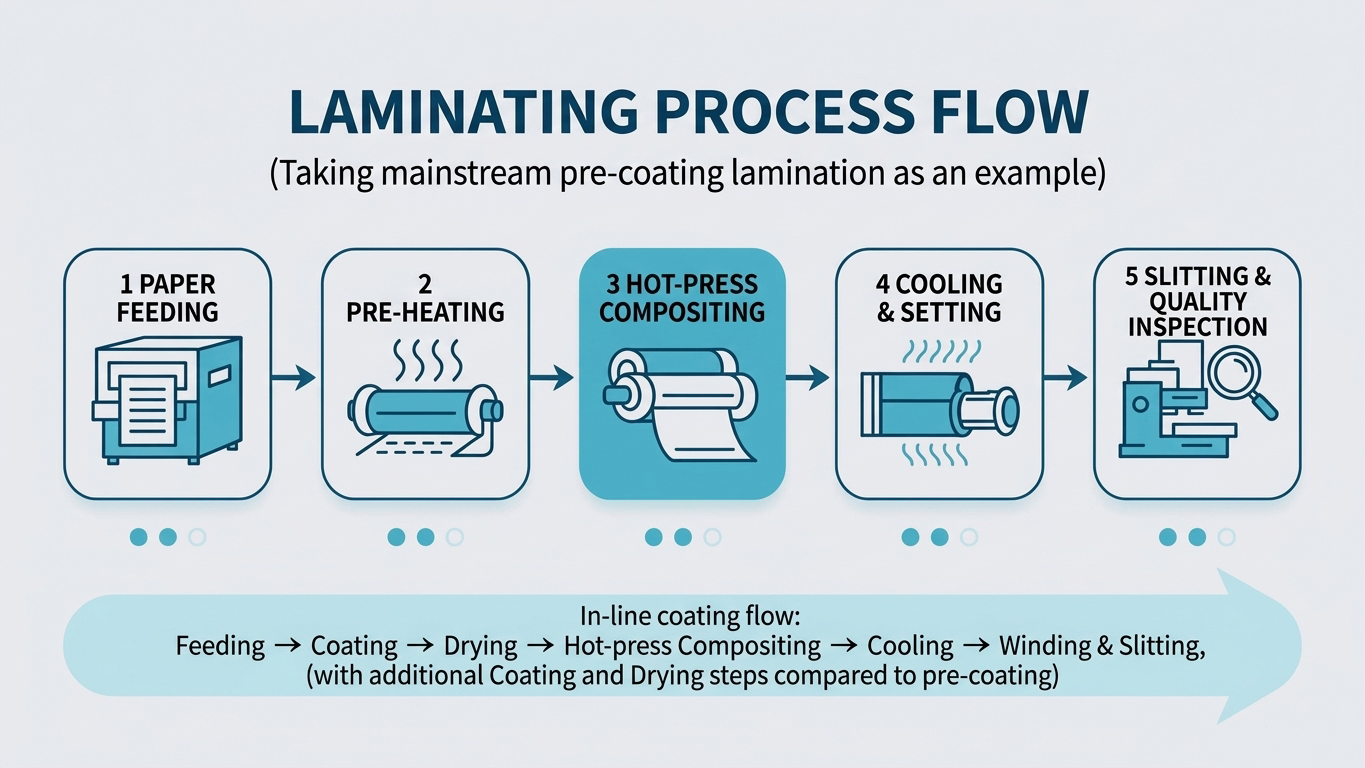
Taking the mainstream pre-coated film as an example, the process flow is: paper feeding → preheating → hot pressing and lamination → cooling and shaping → slitting and quality inspection. The printed material is fed into the laminating machine; the paper surface is first heated uniformly by a preheating unit, then thermally laminated with a film pre-coated with hot-melt adhesive between heated and pressure rollers, set by cooling rollers, and finally slit, wound, and inspected.
The process for wet lamination (using uncoated film) includes two additional steps—adhesive application and drying: paper feeding → adhesive application → drying → thermal lamination → cooling → winding and slitting.
Throughout the process, temperature, pressure, speed, and tension are four key parameters that need to be adjusted comprehensively based on factors such as paper weight, ink properties, and film thickness.
IV. Common Quality Problems and Solutions
Blistering: Primarily caused by insufficient or uneven adhesive application, uneven lamination pressure, or incompletely dried printing ink. In terms of processing, it is important to ensure that the amount of adhesive is uniform and sufficient, appropriately increase the pressing pressure, and wait until the ink is completely dry before laminating.
Curling: This is often caused by excessively thick film, uneven unwinding tension, or excessive temperature and humidity changes in the workshop. A film of appropriate thickness should be selected, the tension should be adjusted, and the temperature and humidity of the workshop should be kept stable.
Wrinkling: Commonly caused by improper tension settings, excessive lamination temperature, or paper deformation due to moisture. The tension should be readjusted, the pressing temperature reduced, and the paper subjected to humidity balancing treatment.
Delamination or Peeling: Often occurs with substrates having low surface energy—such as UV inks or gold/silver cardstock—to which the adhesive struggles to bond. Solutions include corona treatment of the substrate surface, switching to a high-tack adhesive, or applying a primer layer during printing.
White Spots or Mottling: Usually caused by poor ink drying or excessive anti-set-off powder. Remedies include extending drying time, reducing the amount of powder used, and appropriately increasing the lamination temperature.
Dust Attraction via Static Electricity: In dry environments, the film easily accumulates static electricity and attracts dust, compromising lamination quality. This can be resolved by humidifying the workshop or installing static elimination devices.
Uneven Surface: Often linked to excessive lamination temperature, overly rapid adhesive curing, or unstable machine speed; improvements can be made by using staged cooling and stabilizing the machine speed.
V. Recommendations and Precautions for Process Selection
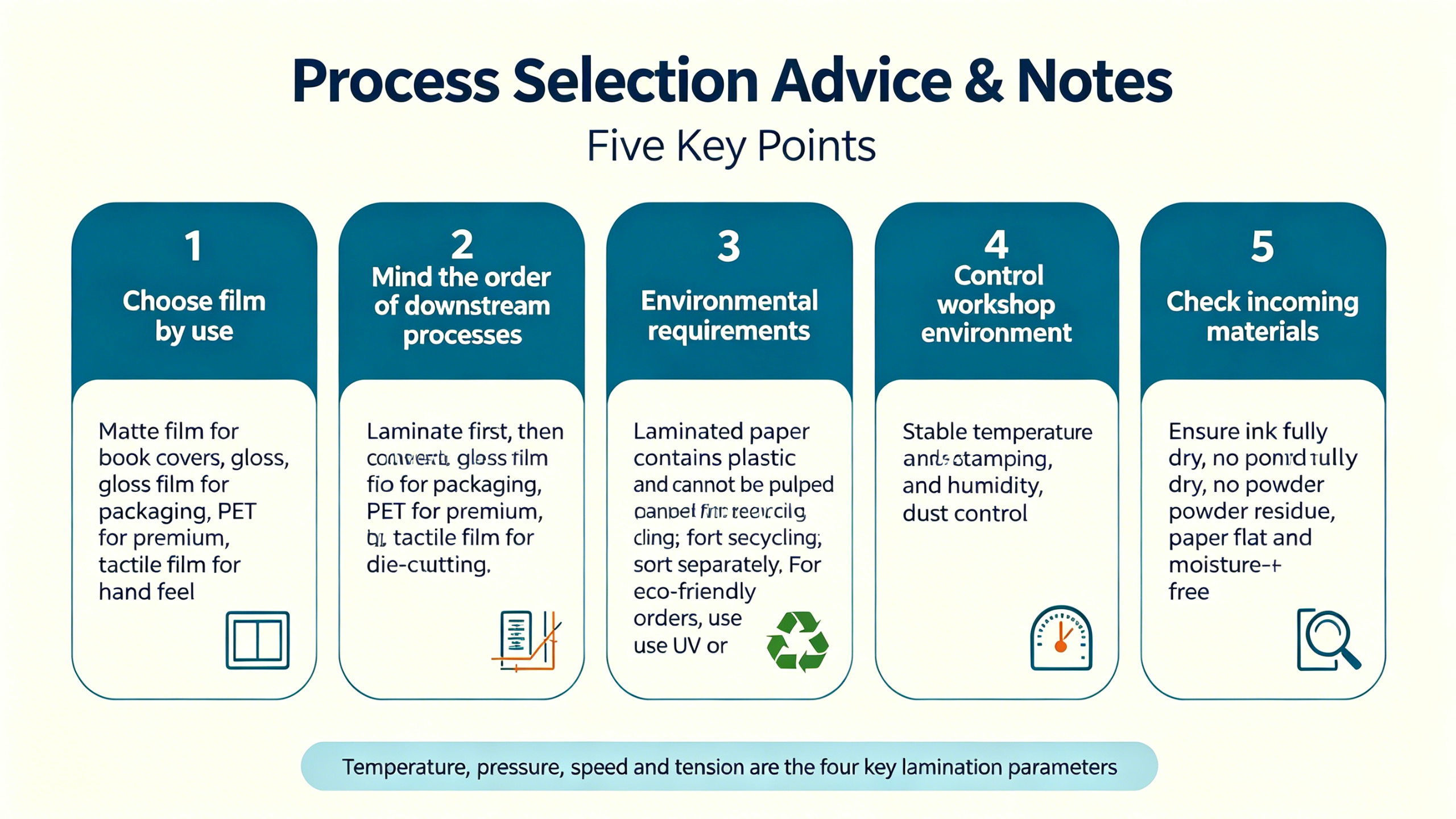
1. Select the film based on product application: Matte film is commonly used for standard book and magazine covers, while glossy film suits packaging that aims for high visual impact; PET film is ideal for products requiring robust protection, whereas "soft-touch" film is suitable for premium packaging where tactile quality is a priority.
2. Pay attention to the order of subsequent processes: Generally, lamination is done first, followed by hot stamping, embossing, die-cutting and other subsequent processing. The surface after lamination is smoother, which is conducive to the fine operation of subsequent processes.
3. Pay attention to environmental protection requirements: The laminated paper contains plastic components and cannot be directly pulped and recycled. It needs to be sorted and processed separately. For orders with high environmental protection requirements, UV coating, water-based coating and other processes can be considered as alternatives to lamination.
4. Control the workshop environment: Temperature, humidity, and cleanliness directly affect lamination quality; maintain stable environmental conditions and implement effective dust control measures.
5. Conduct thorough incoming material inspection: Before lamination, ensure that the ink on the printed materials is completely dry, there is no powder residue on the surface, and the paper is flat and free of moisture to guarantee a stable lamination effect.