Message :
leave a message
If you are interested in our products and want to know more details,please leave a message here,we will reply you as soon as we can.
other
  • Lamination processing methods for printed materials
    Lamination processing methods for printed materials
    Sep 09, 2026
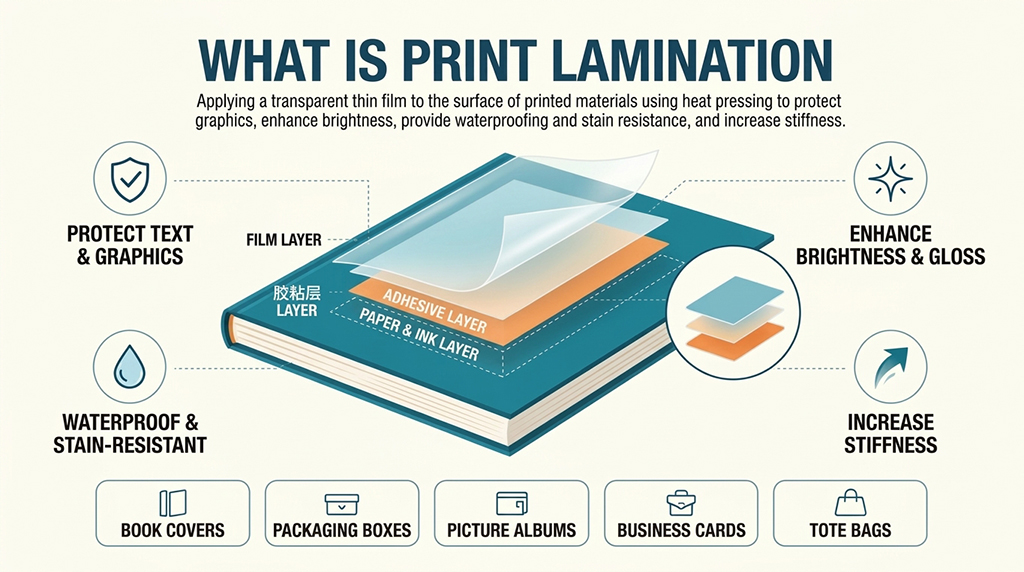
    I. What is printing lamination         Printing lamination, also known as film lamination or coating, refers to the post-processing technique of laminating a layer of transparent plastic film (commonly BOPP, PET, etc.) onto the surface of printed materials using adhesives or hot pressing. The laminated printed material has a protective film on its surface, which can prevent the graphics from being scratched, worn, or contaminated. It also serves to provide waterproofing, moisture protection, gloss enhancement, or matte finish, and can improve the paper's stiffness and overall texture. Lamination is widely used for products such as book and periodical covers, hardcover art albums, packaging boxes, business cards, shopping bags, and hang tags.   II. Classification of Coating Processes 1. Classification by Process Method Wet Lamination (Adhesive-coated lamination): The printed material first passes through a coating unit to apply a layer of adhesive; after drying to remove the solvent, it is bonded to the film under heat and pressure. This process requires low equipment investment, offers high speed, and entails lower costs; however, solvent-based adhesives raise issues regarding Volatile Organic Compound (VOC) emissions and poor environmental performance, leading to the process gradually being phased out. Pre-coated Lamination (Dry lamination): The film comes pre-coated with a layer of hot-melt adhesive from the manufacturer; during use, the printed material and the pre-coated film are simply bonded together in a single step under heat and pressure. As no solvents are used during production, it is environmentally friendly, offers stable bonding quality with minimal bubbling, and is easy to operate, making it the mainstream process in the printing industry. Water-based Lamination: This process uses water-based adhesives (with water as the solvent) for coating and bonding. It is environmentally friendly and offers excellent gloss, though the adhesive layer has relatively weak water resistance; it is suitable for general products with strict environmental requirements. UV Lamination (Solvent-free lamination): This method employs a UV-curable adhesive layer that cures rapidly under ultraviolet light after bonding. It eliminates the need for a drying stage, offers fast curing speeds and superior environmental performance, and is widely used for high-end packaging and premium printed materials.   2. Classification by film material BOPP film (Biaxially Oriented Polypropylene): Offers high transparency, good stiffness, and excellent cost-effectiveness; it is the most commonly used lamination material. PET film (polyester): High hardness, heat and wear resistance, good dimensional stability, used for high-end packaging and products requiring strong protection. PVC film: Has a softer texture but poor environmental performance; it is now rarely used. Specialty films: Include soft-touch films (velvet-like feel), laser/holographic films, pearlescent films, anti-counterfeiting films, etc., used for special decorative effects and security purposes.   3. Classification by surface finish Gloss film: Features a high-gloss surface with vibrant, bright colors; suitable for products requiring strong visual impact. Matte film: Features a matte surface that is understated and elegant; non-reflective and dirt-resistant, it conveys a premium feel and is commonly used for book covers and high-end art albums. Partial lamination: Lamination is applied only to a specific area of the printed material (such as the logo or main pattern). The contrast between glossy and matte finishes, as well as between the laminated and unlaminated areas, creates a sense of depth and tactile difference. This technique is widely used in premium packaging design.   III. Lamination Process Flow Taking the mainstream pre-coated film as an example, the process flow is: paper feeding → preheating → hot pressing and lamination → cooling and shaping → slitting and quality inspection. The printed material is fed into the laminating machine; the paper surface is first heated uniformly by a preheating unit, then thermally laminated with a film pre-coated with hot-melt adhesive between heated and pressure rollers, set by cooling rollers, and finally slit, wound, and inspected.   The process for wet lamination (using uncoated film) includes two additional steps—adhesive application and drying: paper feeding → adhesive application → drying → thermal lamination → cooling → winding and slitting.   Throughout the process, temperature, pressure, speed, and tension are four key parameters that need to be adjusted comprehensively based on factors such as paper weight, ink properties, and film thickness. IV. Common Quality Problems and Solutions Blistering: Primarily caused by insufficient or uneven adhesive application, uneven lamination pressure, or incompletely dried printing ink. In terms of processing, it is important to ensure that the amount of adhesive is uniform and sufficient, appropriately increase the pressing pressure, and wait until the ink is completely dry before laminating.   Curling: This is often caused by excessively thick film, uneven unwinding tension, or excessive temperature and humidity changes in the workshop. A film of appropriate thickness should be selected, the tension should be adjusted, and the temperature and humidity of the workshop should be kept stable.   Wrinkling: Commonly caused by improper tension settings, excessive lamination temperature, or paper deformation due to moisture. The tension should be readjusted, the pressing temperature reduced, and the paper subjected to humidity balancing treatment.   Delamination or Peeling: Often occurs with substrates having low surface energy—such as UV inks or gold/silver cardstock—to which the adhesive struggles to bond. Solutions include corona treatment of the substrate surface, switching to a high-tack adhesive, or applying a primer layer during printing.   White Spots or Mottling: Usually caused by poor ink drying or excessive anti-set-off powder. Remedies include extending drying time, reducing the amount of powder used, and appropriately increasing the lamination temperature.   Dust Attraction via Static Electricity: In dry environments, the film easily accumulates static electricity and attracts dust, compromising lamination quality. This can be resolved by humidifying the workshop or installing static elimination devices.   Uneven Surface: Often linked to excessive lamination temperature, overly rapid adhesive curing, or unstable machine speed; improvements can be made by using staged cooling and stabilizing the machine speed.   V. Recommendations and Precautions for Process Selection 1. Select the film based on product application: Matte film is commonly used for standard book and magazine covers, while glossy film suits packaging that aims for high visual impact; PET film is ideal for products requiring robust protection, whereas "soft-touch" film is suitable for premium packaging where tactile quality is a priority.   2. Pay attention to the order of subsequent processes: Generally, lamination is done first, followed by hot stamping, embossing, die-cutting and other subsequent processing. The surface after lamination is smoother, which is conducive to the fine operation of subsequent processes.   3. Pay attention to environmental protection requirements: The laminated paper contains plastic components and cannot be directly pulped and recycled. It needs to be sorted and processed separately. For orders with high environmental protection requirements, UV coating, water-based coating and other processes can be considered as alternatives to lamination.   4. Control the workshop environment: Temperature, humidity, and cleanliness directly affect lamination quality; maintain stable environmental conditions and implement effective dust control measures.   5. Conduct thorough incoming material inspection: Before lamination, ensure that the ink on the printed materials is completely dry, there is no powder residue on the surface, and the paper is flat and free of moisture to guarantee a stable lamination effect.
    Read More
  • A Comprehensive Guide to Printing and Binding: How to Choose the Right Binding Method?
    A Comprehensive Guide to Printing and Binding: How to Choose the Right Binding Method?
    Sep 02, 2026
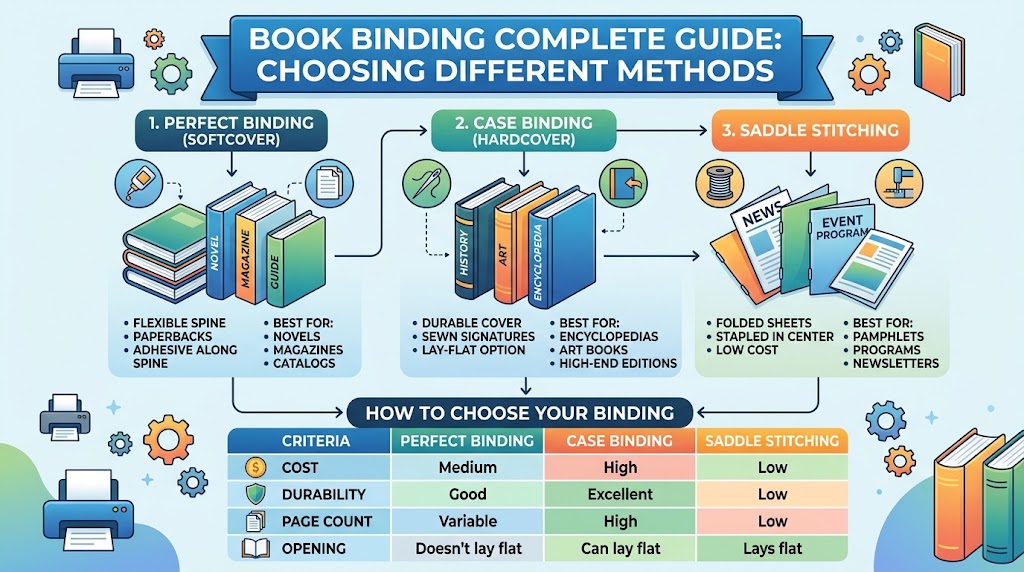
    When producing printed materials, many people focus solely on paper, dimensions, and color, while overlooking the binding method. With the same content and paper, the wrong binding choice can lead to issues such as difficulty opening, pages falling out, a cheap appearance, or an inability to lay flat; conversely, the right choice not only elevates the tactile quality but also suits the intended use and helps control production costs. There is no single "best" binding method—only the one that is most suitable. I. Minimalist Introduction: The Core Selection Logic of Binding Before understanding specific binding methods, remember these 3 core selection criteria to help beginners avoid mistakes: 1. Consider the number of pages: For thin pages (2-40 pages), choose simple binding; for thick books (40 pages or more), choose hardcover or perfect binding. 2. Consider the purpose: For one-time promotions or temporary documents, choose economy binding; for long-term storage, business gifts, or formal tender documents, choose exquisite binding. 3. Consider the usage requirements: If you need to lay the book flat for easy reading, choose sewn binding or hardcover; if you don't need to read frequently, choose regular perfect binding or saddle stitching. II. Detailed Overview of Mainstream Printing and Binding Methods (From Budget-Friendly to High-End) 1. Saddle Stitching | The most cost-effective choice for thin booklets Saddle stitching is the most fundamental and widely used binding method in the printing industry. Its principle is simple: printed sheets are folded in half and secured with two staples along the center fold—a technique named for the way the binding "straddles" the fold like a rider on a horse. Applicable scenarios: corporate brochures, product manuals, periodicals, student workbooks, event flyers, and exhibition brochures. 2. Perfect Binding | A mainstream, mid-range binding method for business applications Perfect binding—also known as adhesive binding—is currently the most common method for binding books and document booklets. It requires no wire or thread; instead, the spine of the printed material is ground smooth, coated with a specialized hot-melt adhesive, and bonded to the cover to form the finished product. The result is a clean, neat appearance free of visible binding marks. Suitable for: Bid documents, academic theses, training manuals, educational supplements, corporate brochures, general books, and product manuals. 3. Thread-Sewn Perfect Binding | An Advanced Binding Method Offering Superior Durability Thread-sewn perfect binding is an upgraded version of standard perfect binding and represents a premium binding technique. Individual folded signatures are first stitched together with thread to form a secure book block; a hot-melt adhesive is then applied to attach the cover. This method combines the structural integrity of thread binding with the clean, sleek appearance of perfect binding. Applicable scenarios: high-end picture albums, fine books, teaching materials, classic manuals, long-term professional materials, and art collections. 4. Hardcover Binding | The Premier Choice for a Premium Business Look Hardcover binding is a high-end finishing technique available in two main forms: sewn hardcover (the industry standard) and adhesive-bound hardcover. It is characterized by a rigid cover—typically constructed from cardboard wrapped in materials such as coated paper, specialty paper, or leather—and interior pages that are usually sewn-bound. This process involves complex craftsmanship and delivers a premium feel. Common styles include round-spine and flat-spine hardcover. Suitable for: Corporate annual reports, high-end brand brochures, commemorative albums, school anniversary albums, collector's editions, business gift books, premium tender documents, and portfolios. 5. Wire Ring Binding | A practical office binding method that can be repeatedly disassembled and reassembled. Wire ring binding, also known as double wire binding, involves punching holes on the side of the paper and inserting a double metal wire to fix it into a book. The wire can be opened and closed flexibly, making it an essential binding method in office settings. Applicable scenarios: resumes, reports, tender documents, study materials, desk calendars, wall calendars, notebooks, recipes, drawing manuals. 6. Thread-bound | A classic Chinese-style binding with a retro feel. Traditional handmade thread-bound books are a classic Chinese binding technique. They do not require glue or nails, and are bound with pure cotton thread by hand. The pages are flat, the binding is simple and elegant, and they have a strong Chinese cultural flavor. Ideal for: Facsimiles of ancient texts, poetry and art albums, calligraphy collections, commemorative books with a traditional Chinese theme, cultural and creative publications, and manuals on traditional culture.  III. Avoiding Common Pitfalls in Binding Selection 1. Forcing a binding method unsuitable for the page count: Avoid saddle stitching for booklets exceeding 40 pages, as excessive thickness causes bulging, page bursting, or misaligned binding; conversely, using standard perfect binding (adhesive binding) for thick volumes often leads to the glue failing and pages falling out over time. 2. Mismatching the binding to the usage scenario: Using simple plastic or wire-O binding for high-end brochures or business proposals cheapens the overall quality; conversely, using hardcover or Smyth-sewn binding for routine, temporary documents results in wasted budget. 3. Overlooking the need for the book to lie flat: Brochures, picture books, and study materials often require a flat-opening format for easy reading; prioritize Smyth-sewn, hardcover, or wire-O binding to avoid the issues associated with standard perfect binding, where the book cannot lie flat and content near the spine becomes obscured. 4. Spine design errors: Saddle-stitched booklets do not have a spine, so no spine text is required; for perfect binding or hardcover, the spine dimensions must be calculated based on the book's thickness to prevent text from appearing cramped or blurry. IV. Quick Selection Summary Table Saddle stitching (best value for money) Booklets and promotional materials (2–40 pages) Standard perfect binding (versatile for everyday use) Standard documents and business brochures (40–400 pages) Smyth-sewn perfect binding (enhanced durability) Thick volumes, frequently read materials, and high-quality publications Hardcover binding (premium look and feel) High-end displays, collector's editions, and business gifts Wire-O binding (durable and detachable) Office documents requiring disassembly or repeated revisions Traditional thread binding Traditional-style creative products and classic literary works V. Conclusion Binding is by no means a mere appendage to the printing process, nor is it a finishing step to be treated casually; rather, it is a critical factor that spans the entire lifecycle of the finished product, directly determining its quality, usability, and durability.   From the moment a printed book is delivered to a reader, the binding takes on multiple responsibilities: carrying the content, protecting the inner pages, supporting the reading experience, and even extending its lifespan. The sturdiness of the binding determines whether the book remains flat and firm after repeated readings and is not prone to falling out or falling apart. Whether the binding method is suitable for the usage scenario determines whether the reading experience is smooth and natural. Whether it lays flat smoothly, whether it is easy to flip through, and whether it is easy to store are all seemingly minor experiences that are often quietly determined by the binding process.   It can be said that binding is not only a physical "assembly", but also the last checkpoint for quality commitment.    
    Read More

  • Hardcover vs. Paperback: Distinct Choices for Readers
    Hardcover vs. Paperback: Distinct Choices for Readers
    Aug 26, 2026
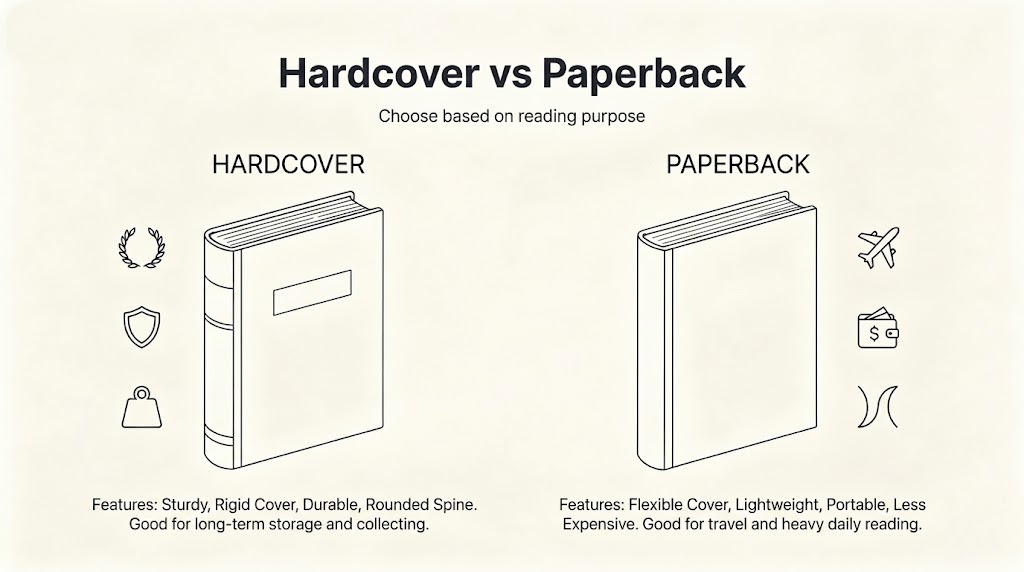
    Upon entering a bookstore, one encounters a dazzling array of books, primarily categorized into two types: hardcover and paperback. Readers often find themselves weighing the differences between the two when making a purchase. In fact, there is no absolute superiority or inferiority between hardcover and paperback; they simply differ in their craftsmanship, positioning, and purpose, and are suited to different reading scenarios and collection needs. Understanding the differences between the two is essential to choosing the most suitable book for yourself.   Paperbacks are the most familiar book format and the dominant choice in the market. Characterized by lightweight paper covers and simple binding techniques—typically perfect binding or Smyth sewing—they are slim, flexible, and highly portable. From textbooks and supplementary teaching materials to popular novels, popular science articles, and essays, the vast majority of everyday reading materials are paperback. Their streamlined production process significantly lowers costs, resulting in affordable prices and excellent value for money. Ideal for daily commutes or casual reading, paperbacks can be easily slipped into a bag; they are effortless to handle and require no special care, even with frequent use or transport, making them perfectly suited to the everyday reading habits of the average person.     Hardcover books are the "exquisite" type of books, emphasizing quality and collectible value. They feature sturdy, thick covers—often crafted from high-end materials like coated paper, cloth, or leather—that are durable and scratch-resistant. Binding usually involves Smyth sewing, ensuring pages remain secure and allowing the book to lie flat for a superior reading experience. Meanwhile, hardcover books feature more refined printing processes, thicker paper, clearer text, and a high-quality color scheme. Some books also come with dust jackets, belly bands, gold foil stamping, and other decorative elements, making them highly visually appealing. However, their larger size and heavier weight make them inconvenient to carry around, and higher production costs result in prices significantly higher than those of standard paperbacks.     Ultimately, the fundamental difference between the two lies in the trade-off between practicality and collectibility. Paperbacks prioritize practicality, catering to everyday reading, quick browsing, and repeated perusal; they are well-suited for essential reference materials and recreational reading. Hardcovers, on the other hand, emphasize a sense of occasion and longevity, making them ideal for literary classics, collected works, art albums, and commemorative editions. For classic works that are worth reading repeatedly and treasuring for a long time, hardcover editions can better preserve the contents of the book and remain in good condition even after the years; while for ordinary popular books, paperbacks are sufficient to meet reading needs and are more economical.     In short, hardcovers excel in their exquisite quality, durability, and suitability for collecting, while paperbacks win on portability, affordability, and versatility for daily use. The core of reading is never the quality of the book's cover, but the power of the words themselves. By choosing the appropriate format based on how the book will be used, one can enjoy a comfortable reading experience while ensuring each book delivers its full value.
    Read More
  • Popular Science about Printing: From Millennia-Old Wisdom to Modern Technology
    Popular Science about Printing: From Millennia-Old Wisdom to Modern Technology
    Aug 20, 2026
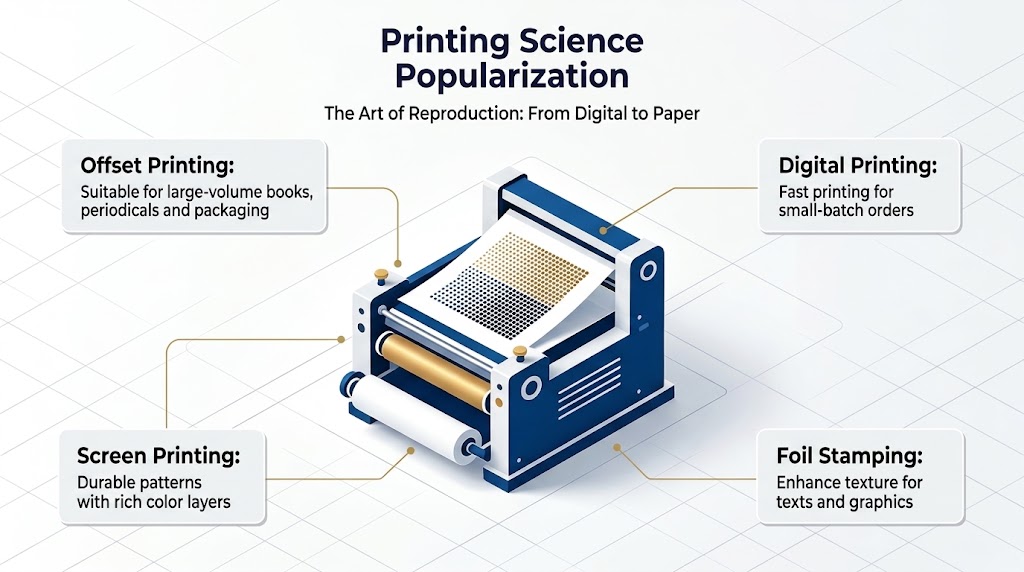
    Printing is the technology of transferring information such as text and images onto paper or other media using a printing plate. It is not merely an industrial process but a vital engine driving the transmission of human civilization and the dissemination of information. From ancient woodblock printing to modern digital printing, the history of printing technology is a history of the popularization of human knowledge.       The long-standing wisdom of printing   China is the birthplace of printing. As early as the Tang Dynasty, woodblock printing was invented. Craftsmen would carve the entire page of text backwards onto a wooden block, brush it with ink, cover it with paper, and then print out pages with black text on a white background. During the Northern Song Dynasty, a commoner artisan named Bi Sheng invented movable type printing; by creating individual characters from clay, arranging them for printing, and then dismantling them for reuse, he vastly improved efficiency and ushered in a new era in the history of printing. Subsequently, wooden and metal movable type technologies were developed. In modern times, the laser typesetting technology for Chinese characters invented by scientist Wang Xuan has enabled the Chinese printing industry to bid farewell to "lead and fire" and enter the era of "light and electricity".     The Four Major Basic Modern Printing Processes   Letterpress printing: the oldest printing method, where the images and text on the printing plate are raised. During printing, ink is applied to the raised surface and pressed onto the paper. Its characteristics include clear printing and rich ink color, and it is often used for label and packaging printing. Gravure printing: In contrast to relief printing, the image and text areas are recessed. During printing, the grooves are filled with ink. After scraping off the excess ink from the surface, the ink in the grooves is transferred to the substrate under pressure. Gravure printing has a thick ink layer, strong color expression, and high printing durability, and is often used for high-end picture albums, banknotes, and plastic packaging. Offset printing: also known as lithography, is currently the most widely used printing method. It utilizes the principle of "oil and water are immiscible", where the image and text areas on the printing plate are attracted to ink, while the blank areas are attracted to water. During printing, water is applied first, followed by ink. Only the image and text areas are coated with ink, and then the ink is transferred to the paper using a rubber blanket. Most of the books, newspapers, and magazines we see every day use this process. Screen printing: also known as silk screen printing, the printing plate is mesh-like, the mesh of the image area can pass through ink, while the blank areas are blocked. During printing, a squeegee forces the ink through the mesh openings onto the substrate. It is highly adaptable and can be printed on various materials such as paper, plastic, metal, and fabric. It is commonly used for T-shirts, posters, and circuit boards.       Basic Knowledge of Modern Printing Design and Technology   Color Mode: Design files must use the CMYK color mode (Cyan, Magenta, Yellow, Black), which is the standard for four-color printing inks. RGB is a screen display mode; using it directly for printing will result in significant color discrepancies. Bleed Settings: A "bleed" area of ​​approximately 3mm is typically required around the edges of the design. This prevents white edges from appearing on the finished product due to minor cutting inaccuracies. Black text processing: For small-sized black text, it should be set to single-color black (C0 M0 Y0 K100), and avoid using four-color black (CMYK all have values) to prevent misregistration that could cause blurry text or ghosting. Post-printing processes: Processing after printing can greatly enhance the quality of the product. For example, lamination can protect printed materials and increase gloss; UV varnishing can make local graphics and text crystal clear; embossing and debossing can create a three-dimensional tactile effect; and die-cutting can cut paper into various irregular shapes.         Printing is a comprehensive craft that integrates science, technology and art. From the ingenious carvings of a thousand years ago to today's intelligent digital printing, it has been constantly evolving, delivering our thoughts and creativity to every corner of the world in a more efficient, environmentally friendly, and exquisite way.
    Read More
  • Offset Printing VS Digital Printing: Which Printing Method Is Better for Your Project?
    Offset Printing VS Digital Printing: Which Printing Method Is Better for Your Project?
    Aug 01, 2026
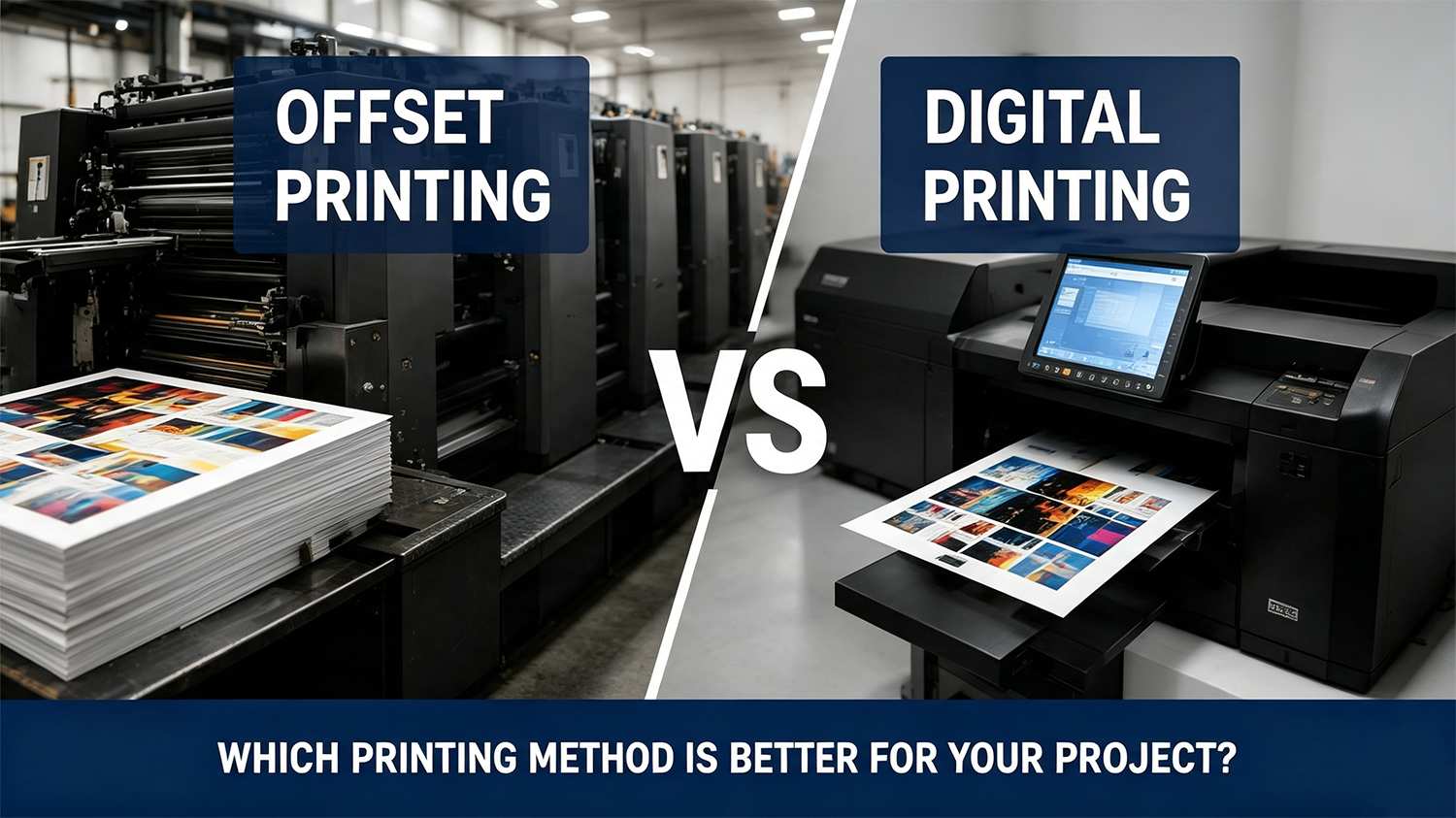
    Offset Printing vs Digital Printing: Which Printing Method Is Better?   Choosing the correct printing method is an important decision for any custom printing project. Many customers ask: "Should I choose offset printing or digital printing?" The answer depends on several factors: ♦ Quantity ♦ Budget ♦ Product type ♦ Required quality ♦ Production timeline Understanding the difference helps you make a better decision.   1.What Is Offset Printing?   Offset printing is a traditional commercial printing method widely used for large-volume production. During offset printing, ink is transferred from printing plates to a rubber blanket and then onto the printing surface. Advantages: ✔ Excellent color consistency ✔ High-quality output ✔ Cost-effective for large quantities   Common applications: ✔ Books ✔ Magazines ✔ Catalogs ✔ Packaging ✔ Brochures   2.What Is Digital Printing? Digital printing transfers digital files directly onto materials without printing plates. Advantages: ✔ Faster production ✔ No plate setup required ✔ Suitable for small quantities ✔ Easy customization   Common applications: ✔ Samples ✔ Short-run products ✔ Personalized printing ✔ Marketing materials   3.Offset Printing vs Digital Printing Comparison Feature Offset Printing Digital Printing Best for Large Quantities Small Quantities Setup Cost High Low Unit Cost Lower (Bulk Orders) Higher (Large Orders) Production Speed Slower Setup Faster Turnaround Time Longer (Setup Required) Shorter Customization Limited Flexible Color Consistency Excellent Very Good Printing Quality High High   4.How To Choose The Right Printing Method? Choose offset printing when: ♦ You need thousands of pieces ♦ Color consistency is important ♦ You want lower unit cost   Choose digital printing when: ♦ You need samples ♦ Quantity is small ♦ You need fast delivery A professional printing manufacturer can analyze your project and recommend the best solution.   5.Why Work With An Experienced Printing Factory? A reliable supplier understands that every project is different.   Instead of offering one fixed solution, professional manufacturers provide: ♦ Material recommendations ♦ Printing method suggestions ♦ Cost optimization ♦ Quality assurance Quality Control A reliable printing company should maintain strict quality standards. Important inspection points include:   Before Production Artwork review File checking Color confirmation   During Production Printing monitoring Color comparison Material inspection   Before Shipping Printing monitoring Color comparison Material inspection   Common Questions About Offset and Digital Printing 1.Is digital printing lower quality than offset printing? Not necessarily.Modern digital printing technology provides excellent quality and is suitable for many professional applications.However, offset printing usually provides better consistency for large-volume projects. 2.Can a printing factory provide both offset and digital printing? Yes.Professional custom printing services usually support multiple printing technologies to meet different customer requirements. 3.How can I choose the right printing method? The easiest way is to consult an experienced printing supplier. Provide information about: ♦ Color ♦  Paper type ♦ Quantity ♦ Size ♦ Material ♦ Binding way ♦ Delivery requirements A professional manufacturer can recommend the most suitable solution. Conclusion: Choosing the Right Printing Method Creates Better Results Both offset printing and digital printing have important advantages. Offset printing provides: ♥ Premium quality ♥ Stable colors ♥ Cost advantages for large production Digital printing provides: ♥ Faster production ♥ Flexible customization ♥ Better solutions for small orders   The best printing solution depends on your specific project requirements. As an experienced custom printing manufacturer, we provide professional printing solutions, strict quality control, and customized production services for customers worldwide. Whether you need packaging, books, catalogs, promotional products, or other printed materials, our team can help you choose the right printing method. Contact us today and get a professional printing solution for your project.      
    Read More
  • A Printing Guide for Independent Authors: 5 Common Pitfalls and Professional Solutions
    A Printing Guide for Independent Authors: 5 Common Pitfalls and Professional Solutions
    Jun 24, 2026
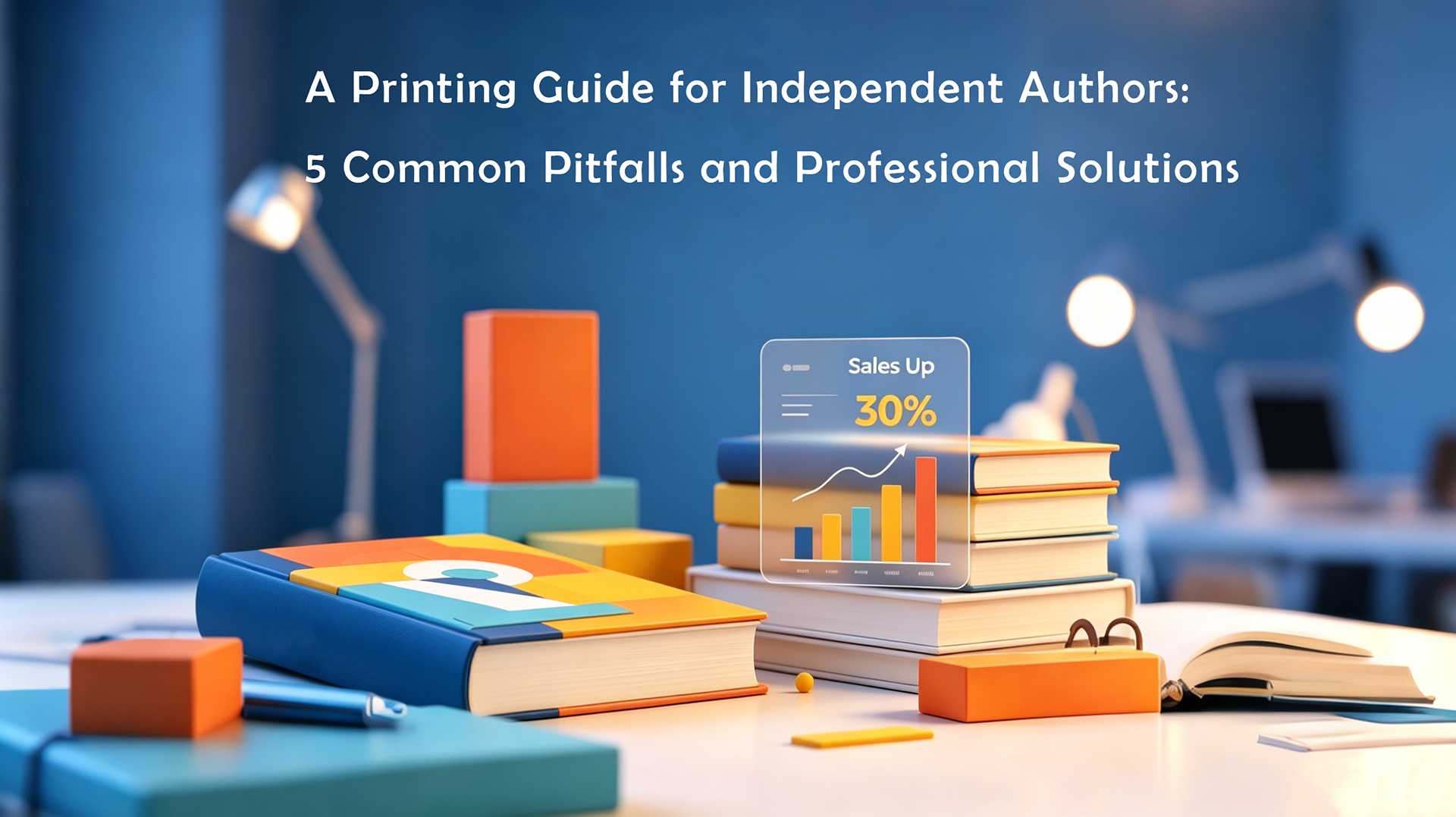
    Congratulations on completing your manuscript! For independent authors, holding a freshly printed copy of their book for the first time is a magical moment. However, the journey from clicking "Publish" to holding that beautifully crafted book involves a printing process that can sometimes feel like navigating a minefield.   In the printing industry, we have encountered a wide range of issues: poor color reproduction, text getting cut off, or pages falling out after just a few uses. As your printing partner, we sincerely want your book to be a success. We have compiled a list of the five most common printing mistakes made by independent authors, along with specific ways to avoid them.   1. The Color Trap: RGB VS CMYK The Mistake: The cover looks vibrant and stunning on a Retina screen, but the printed physical copy appears dull or muddy. The Solution: Screens display colors using RGB (Red, Green, Blue) light, whereas printing presses use CMYK (Cyan, Magenta, Yellow, Black) inks. RGB has a wider color gamut, meaning certain bright colors visible on screen cannot be replicated in print. Pro Tip: Always convert your images and files to CMYK mode before exporting your PDF. If color accuracy is critical (such as for children's picture books or photography collections), we recommend requesting a physical proof before proceeding with the full print run.   2. Neglecting "Bleed" and the "Safe Zone" The Mistake: Page numbers, headers, or key text get partially sliced ​​off during the trimming process, resulting in an incomplete-looking book. The Solution: Commercial printing takes place on large sheets of paper that are subsequently cut down to the final size. Cutting blades have a tiny margin of error (approximately 1–2 mm). Pro Tip: Extend background images or blocks of color at least 3 mm beyond the final page dimensions (this is known as the "bleed"). Ensure all important text and elements are kept at least 5 mm away from the trim line (the "safe zone").   3. Choosing the wrong paper weight The Mistake: Assuming "thicker is better," you chose heavy 300gsm paper for a 400-page novel. The result? A book as heavy as a brick and shipping costs that blew your budget. The Solution: Paper weight (GSM) affects both the book's tactile feel and the thickness of the spine. Pro Tip: For novels, 80–100gsm uncoated paper (or cream-colored paper) is the industry standard—it’s lightweight, easy to read, and cost-effective. For art books, children's picture books, or photography collections, 128–157gsm coated paper (gloss or matte art paper) delivers vibrant colors and the necessary durability.   Not sure which specifications suit your book? Ask us for a free sample :)   4. Choosing the wrong binding method The Mistake: Your book starts losing pages after just a few reads simply because you opted for standard perfect binding instead of Smyth sewing. The Solution: There is no "one-size-fits-all" binding method; the choice depends on the specific book. Pro Tip: For booklets with fewer than 40 pages, saddle stitching is recommended. For standard paperbacks (40–300 pages), perfect binding is a solid choice. However, if the book exceeds 300 pages—or if you want it to lie completely flat when opened—you should upgrade to Smyth sewing (section sewing). Although the cost is slightly higher, the durability and superior reading experience pay off in the long run.   5. The font and layout The Mistake: You submit a beautiful PDF, but the printer reports missing fonts, causing your carefully designed layout to shift or the typography to become a jumbled mess. The Solution: The printer’s computers may not have the specific fonts you used installed. Pro Tip: When exporting your final print-ready PDF, make sure to select the "Embed All Fonts" option. Alternatively, you can convert all text to outlines (or curves) within your design software. Before sending us your files, please open the PDF on another device to verify that everything displays perfectly.   For self-published books, cover finishing techniques are never merely decorative details; they are pivotal factors that determine sales performance. Skillfully combining key techniques—such as lamination, spot UV, foil stamping, and specialty paper—maximizes your design's impact, establishes a unique aesthetic, and effectively boosts both shelf appeal and conversion rates.   You have already tackled the arduous task of writing; let us handle the technical details. There is no need to blindly chase expensive, complex finishes. The real secret to creating a best-selling self-published book cost-effectively lies in selecting the right techniques based on the book's genre, market positioning, and sales context.   Before mass production begins, our prepress team reviews your files for free—checking bleeds, color pce with printing standards. We offer all self-published authors complimentary services, including custom finishing recommendations, file pre-checks, and proofing. We tailor a cover printing strategy that balances cost-effectiveness with high sales potential, perfectly aligned with your book's positioning.   Submit your cover design files now to receive a customized proposal and an accurate quote within two hours.  
    Read More
  • The Ultimate Guide to Custom Book Printing for Self-Publishing Authors in 2026
    The Ultimate Guide to Custom Book Printing for Self-Publishing Authors in 2026
    Apr 28, 2026
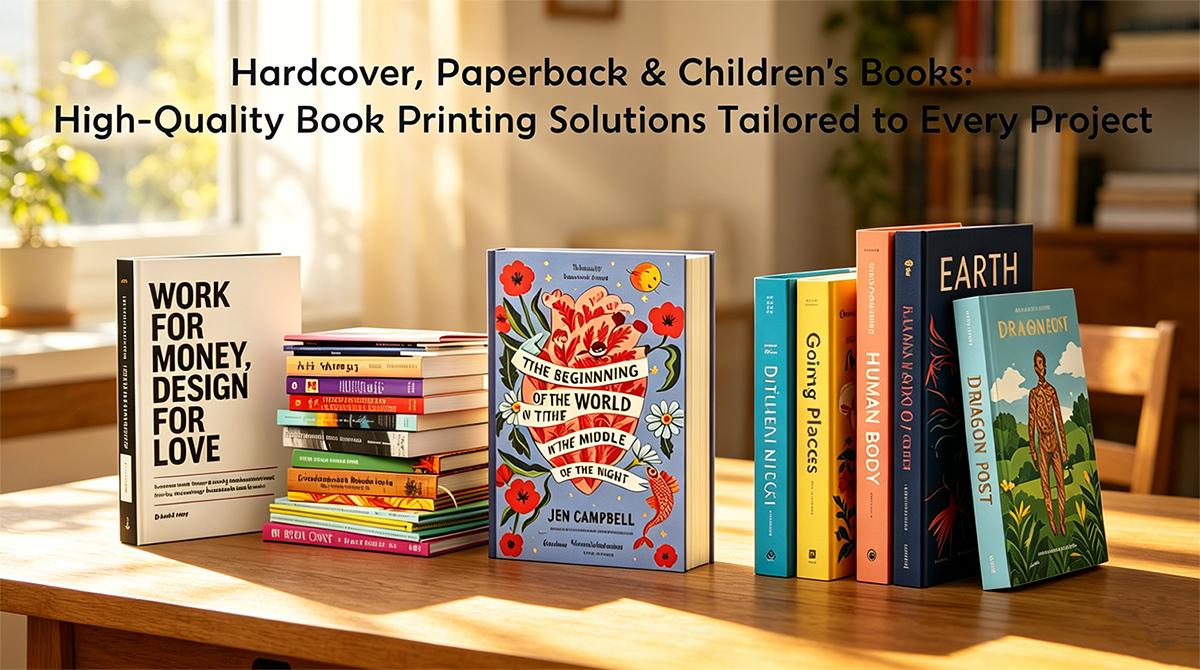
    Looking for a reliable custom book printing service? This guide covers binding types, paper choices, pricing factors, and tips for self-publishing authors to easily print high-quality books.   Introduction Writing is one of the most fulfilling things for creators. However, most self-publishing authors encounter a bottleneck at the final and most crucial step—book printing.   Many new authors face confusing binding options, unknown printing costs, unreliable suppliers, and excessively high minimum order quantities. If you are looking for a cost-effective and high-quality custom book printing solution for your novel, poetry collection, cookbook, or children's book, then we are your best choice.   In this guide, we will detail everything you need to know about custom book printing to help you make the best choice for your book project.   1. Two Main Bookbinding Methods You Need to Know   Before starting your printing project, you first need to choose a binding method that suits your book type and budget.   Paperback (Softcover Book)   Paperback is the most popular choice for self-publishing authors. Paperbacks are soft-covered, sturdy, lightweight, and affordable, making them ideal for novels, magazines, and short story collections. For authors with limited budgets and small print runs, paperbacks are the best choice.     Hardcovers (Strict Cover Books)   Hardcovers feature hard-cover protection, high-quality inner pages, and durable thread binding. They are perfect for children's books, photo books, cookbooks, collector's editions, and gift books. Hardcovers have higher market value and can effectively enhance your brand image as an author.     2. How to Choose the Right Paper for Your Books?   Paper material directly affects the reader's reading experience and the overall quality of the book. We have summarized three commonly used paper types for your reference:   Offset Paper: The standard choice for text-based books such as novels and essays. Low reflectivity, comfortable for extended reading, and affordable.   Coated Paper: Suitable for books with many images, such as children's books and photo books. The smooth surface perfectly showcases colors and details.   Beige Paper: A warm-toned paper that reduces eye strain and is widely used in high-end literary books.   3. What factors affect the printing price of custom books?   Most authors are most concerned about printing costs. The final price of a custom book depends on the following five core factors:   1. Book size (A4, A5, custom size)   2. Total number of pages   3. Binding method (hardcover or paperback)   4. Paper thickness and material   5. Printing quantity (we support small batches and wholesale)   6. Color   We offer flexible minimum order quantities, supporting custom book printing services with low minimum order amounts, which is very friendly to independent publishing authors.   4. Frequently Asked Questions about Book Printing   Q1: What is the minimum order quantity for custom books?   We support sample printing and small batch orders, starting from a small number of books to meet your testing, quality requirements, and sales needs.   Q2: How long does the entire printing process take?   Depending on your book specifications, production time is generally 7-15 working days, plus international shipping time to your country.   Q3: Can I customize the book cover and add special processes?   Of course! We offer a variety of processes, including UV coating, hot stamping, embossing, and matte/gloss lamination, to make your book covers more appealing.   In summary, printing high-quality custom books doesn't have to be complicated or expensive. Whether you're an independent author publishing your first novel, a creator making a custom photobook, or a small publisher looking for a long-term printing supplier, we provide a one-stop book printing solution to meet your needs.   If you have any questions about book size, paper selection, or budget estimates, please feel free to contact our professional team. Get your free custom quote today!
    Read More

leave a message

leave a message
If you are interested in our products and want to know more details,please leave a message here,we will reply you as soon as we can.